
Europe’s Most Famous Casinos and the Stories Behind Their Legendary Status
Europe has long been associated with grand casinos, aristocratic gaming salons and iconic gambling traditions that shaped modern casino culture. Some establishments became symbols of luxury, while others earned worldwide recognition because of royal visitors, cinematic appearances or remarkable moments in gambling history. In 2026, these casinos continue to attract travellers not only because of gaming tables and slot machines, but also because of their architecture, social significance and cultural influence. Many of them survived wars, economic crises and changing gambling regulations, preserving traditions that date back more than a century.
Casino de Monte-Carlo and the Rise of Monaco’s Gambling Reputation
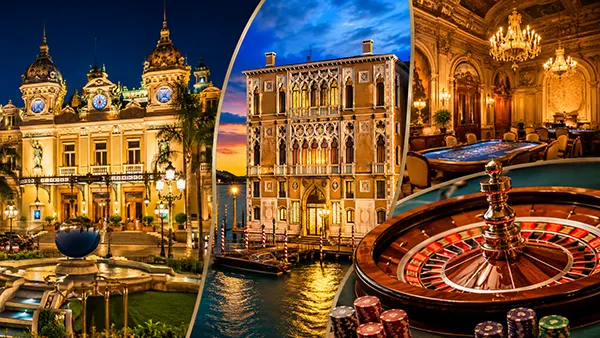
Casino de Monte-Carlo remains one of the most recognisable gambling venues in the world. Opened in 1863, the casino was created during a difficult financial period for Monaco. Prince Charles III approved the development of a casino business to generate revenue for the principality, and the project eventually transformed Monaco into one of Europe’s wealthiest destinations. The building itself was designed by Charles Garnier, the architect responsible for the Paris Opera House, which explains the venue’s distinctive Belle Époque style.
The casino gained international attention during the late nineteenth and early twentieth centuries, when aristocrats and wealthy industrialists travelled to the French Riviera for entertainment. Monte-Carlo became associated with elegance, high-stakes roulette and exclusive social gatherings. Over time, the venue established strict dress codes and membership expectations that reinforced its elite image. Even in 2026, visitors still encounter many traditional rules designed to preserve the atmosphere that made the casino famous decades ago.
Popular culture also played a major role in the casino’s legendary reputation. Several James Bond films used Monte-Carlo as a backdrop for scenes involving baccarat and roulette. The connection with cinema strengthened the image of the casino as a place linked with sophistication and risk. Despite the growth of online gambling and modern entertainment resorts, Casino de Monte-Carlo remains a landmark that symbolises the historical glamour of European gambling culture.
Historic Gambling Stories Connected to Monte-Carlo
One of the most discussed stories connected with Monte-Carlo took place in 1913, when a roulette wheel produced black twenty-six times consecutively. Players lost enormous sums because many gamblers continued betting on red, believing the streak could not continue. The event became one of the best-known examples of the “gambler’s fallacy”, a psychological phenomenon still discussed in probability studies and casino behaviour analysis.
Another famous chapter in the casino’s history involves François Blanc, often called the “Wizard of Monte Carlo”. Blanc introduced operational innovations that made roulette more attractive to players, including the single-zero roulette wheel. This version offered better odds than double-zero roulette and helped establish European roulette as the preferred format in prestigious casinos across the continent.
The casino also became a meeting place for European nobility, celebrities and political figures throughout the twentieth century. During the post-war years, Monte-Carlo represented financial recovery and luxury tourism for Southern Europe. Its gaming rooms, restaurants and theatre spaces contributed to Monaco’s global identity, helping the principality maintain its status as one of Europe’s most recognised luxury destinations.
The Venetian Heritage of Casino di Venezia
Casino di Venezia is widely regarded as the oldest operating casino in the world. Located in Venice and operating since 1638, the venue originally functioned as part of the Teatro Saint Moses. At the time, Venetian authorities allowed controlled gambling during carnival season, creating one of the earliest examples of regulated casino entertainment in Europe.
The current casino building, Ca’ Vendramin Calergi, stands directly on the Grand Canal and reflects Renaissance architectural traditions. Beyond gambling activities, the palace itself carries cultural significance because composer Richard Wagner spent his final days there in 1883. Today, the venue combines gaming rooms with exhibitions and historical displays that connect visitors with Venice’s artistic and social history.
Unlike modern integrated casino resorts focused mainly on large-scale entertainment, Casino di Venezia preserved a more classical atmosphere. Table games remain central to the experience, and many visitors are attracted by the historical setting rather than aggressive commercial promotion. In 2026, the casino still represents the connection between Venetian cultural heritage and the early development of European gambling institutions.
The Influence of Venice on European Gambling Culture
Venice played a major role in shaping gambling customs across Europe. During the seventeenth and eighteenth centuries, wealthy merchants and travellers visited the city for festivals, masked events and gaming houses. The popularity of these establishments encouraged other European cities to create similar venues under government supervision.
Casino di Venezia also contributed to the standardisation of certain card games and betting etiquette. Historians often point to Venice as one of the places where organised gambling became socially acceptable among the upper classes. This acceptance later influenced the gambling traditions of France, Austria and Germany.
Another reason for the casino’s legendary status lies in its survival through political changes and economic transformations. Venice experienced foreign occupations, wars and tourism booms, yet the casino continued operating in different forms for centuries. This continuity gives the venue a historical depth rarely found in modern gambling establishments.
Baden-Baden and the Elegant Casino Traditions of Germany
Casino Baden-Baden in Germany became famous during the nineteenth century, particularly among European aristocrats and intellectuals. Located near the Black Forest, the spa town of Baden-Baden attracted wealthy visitors seeking relaxation, cultural events and entertainment. The casino itself opened in 1824 and quickly developed a reputation for elegance and refinement.
The interiors of Casino Baden-Baden were inspired by French royal palaces, featuring chandeliers, gold detailing and richly decorated halls. Writers and artists often described the venue in literature and travel memoirs. Russian novelist Fyodor Dostoevsky famously visited the casino and used his experiences there as inspiration for his novel “The Gambler”, published in 1867.
In 2026, Casino Baden-Baden continues to balance historical traditions with modern gaming standards. Visitors still encounter classical roulette rooms alongside electronic gaming areas and poker tournaments. The venue also hosts concerts, gala dinners and cultural events, reflecting its broader role as a social institution rather than simply a gambling location.
Dostoevsky, High Society and the Legacy of Baden-Baden
Dostoevsky’s connection with Baden-Baden remains one of the casino’s most famous historical associations. The Russian author struggled with gambling addiction during his visits and reportedly lost substantial sums at roulette tables. His observations of player behaviour, emotional pressure and obsession later became central themes in “The Gambler”.
During the nineteenth century, Baden-Baden attracted influential figures from across Europe, including musicians, diplomats and members of royal families. The town became known as the “summer capital of Europe” because elite visitors gathered there during holiday seasons. The casino therefore evolved into a social centre where politics, culture and entertainment frequently intersected.
The casino’s reputation also survived periods when gambling restrictions were introduced in Germany. Temporary closures and legal changes affected operations, but Baden-Baden eventually regained its status as one of Europe’s leading casino destinations. Its combination of literary history, classical architecture and long-standing gaming traditions continues to distinguish it from newer casino resorts across Europe.