
How the Emergence of Casinos in Baden-Baden Reshaped European Gambling Culture in the 19th Century
In the 19th century, Baden-Baden transformed from a quiet spa town into one of Europe’s most influential centres of leisure and gaming. Its casino did more than attract wealthy visitors — it redefined how gambling was perceived across the continent. By combining refined architecture, strict etiquette, and an elite social environment, Baden-Baden created a new cultural model where gambling was not merely a pastime, but a structured social ritual tied to status, politics, and intellectual life.
Baden-Baden as a Meeting Point of European Elites
The rise of the casino in Baden-Baden coincided with the popularity of spa tourism among European aristocracy. Visitors from France, Russia, Britain, and Prussia gathered in one place, turning the town into a seasonal hub of diplomacy and informal political discussion. Gambling rooms became spaces where conversations extended far beyond the gaming tables.
Writers such as Fyodor Dostoevsky, who famously visited Baden-Baden, documented the psychological tension of gambling, helping to shape its literary and cultural image. The casino environment influenced how intellectuals and artists interpreted risk, fortune, and human behaviour, giving gambling a philosophical dimension rarely seen before.
This convergence of elites meant that gambling in Baden-Baden was not isolated entertainment. It became embedded in high society, influencing etiquette, fashion, and social norms. The presence of royalty and diplomats reinforced the idea that casinos could operate as respectable and controlled environments.
The Role of Architecture and Atmosphere
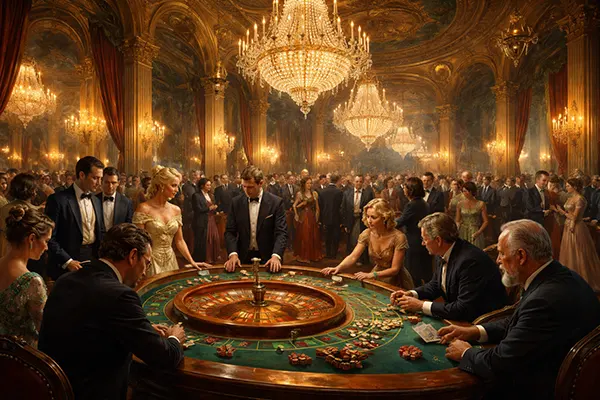
The physical design of the Baden-Baden casino played a critical role in its cultural impact. Inspired by French palaces, the interiors featured chandeliers, frescoes, and carefully arranged gaming halls that encouraged a sense of order and sophistication rather than chaos.
Unlike earlier gambling venues, which were often associated with disorder, Baden-Baden introduced structured layouts and regulated access. Dress codes and behavioural expectations ensured that visitors adhered to social standards, reinforcing the perception of gambling as a refined activity.
This approach influenced later casino developments across Europe, particularly in Monte Carlo and other resort destinations. The emphasis on environment demonstrated that the setting itself could elevate gambling into a socially acceptable experience.
The Transformation of Gambling’s Social Reputation
Before the rise of Baden-Baden, gambling in Europe was often linked to moral decline and financial ruin. Authorities frequently imposed bans, and gaming houses operated in ambiguous legal spaces. The Baden-Baden model challenged these assumptions by introducing regulation and transparency.
Operators implemented clear rules, fixed odds structures, and controlled access to games such as roulette and trente et quarante. This reduced the unpredictability associated with underground gambling and helped build trust among visitors. The casino became a place where risk was managed rather than hidden.
As a result, public perception shifted. Gambling was increasingly seen as a leisure activity for the educated and wealthy, rather than a vice confined to lower social classes. This rebranding had long-term consequences for the development of regulated gaming industries across Europe.
Influence on Legal Frameworks in Europe
The success of Baden-Baden encouraged other regions to reconsider their approach to gambling regulation. Governments observed that controlled casino environments could generate revenue while maintaining social order, leading to more structured legal frameworks.
In France and Monaco, similar models were adopted, combining strict oversight with high-end experiences. These developments marked the beginning of modern casino regulation, where authorities balanced economic benefits with social responsibility.
The legacy of Baden-Baden can be seen in contemporary licensing systems, where transparency, player protection, and operational standards remain central. The 19th-century experiment effectively laid the groundwork for today’s regulated gambling environments.
Cultural and Economic Impact Beyond Germany
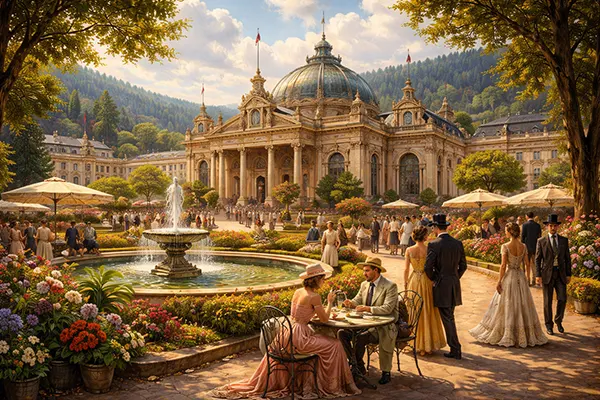
Baden-Baden’s influence extended far beyond its geographical location. It became a reference point for how leisure destinations could integrate gambling into broader tourism strategies. The combination of health resorts, entertainment, and gaming created a model replicated across Europe.
The economic benefits were significant. Hotels, theatres, and restaurants flourished alongside the casino, demonstrating how gambling could support local economies. This integrated approach became particularly visible in cities like Monte Carlo, which adopted and expanded upon the Baden-Baden concept.
At the same time, cultural narratives around gambling evolved. It was no longer portrayed solely as destructive but also as a reflection of human psychology, chance, and social interaction. Literature, journalism, and art began to treat casinos as complex social spaces rather than simple venues for wagering.
Legacy in Modern European Casino Culture
Many elements introduced in Baden-Baden remain visible in modern casinos. These include architectural elegance, controlled access, and the blending of entertainment with hospitality services. The idea that a casino should offer a complete experience originates largely from this period.
Contemporary European casinos continue to balance regulation with atmosphere, reflecting the lessons learned in the 19th century. The emphasis on responsible gaming and structured environments echoes the early efforts to legitimise gambling in Baden-Baden.
Ultimately, the town’s historical role lies in redefining gambling as part of cultural life rather than an isolated activity. Its influence persists in how casinos operate, how they are perceived, and how they integrate into broader social and economic systems.